
 1405/06/23
What is the Internet of Things (IoT)?
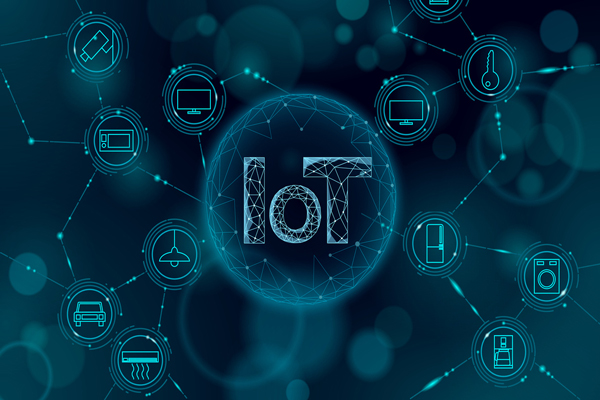
The Internet of Things (IoT) is a technology that enables various objects to communicate with each other.
What is the Internet of Things (IoT)?
It is a technology that enables various objects to communicate with each other and automatically send and receive information without human intervention. This technology is made possible by sensors, smart devices, software, and network connections. Below are some features and applications of the Internet of Things:
Features:
1. Sensors and Devices:
The Internet of Things collects environmental information using diverse sensors and devices. These sensors can measure information such as temperature, humidity, pressure, light, location (GPS), etc.
2. Network Connections:
The Internet of Things uses network connections such as the internet, cellular networks, Wi-Fi, and LoRa to enable devices to communicate with each other and with servers.
3. Data Processing:
Due to the large volume of data in the Internet of Things, many information processing processes are performed at the Edge (Edge Computing). This means processing data near the source of its collection.
4. Communication Protocols:
To communicate between devices in the Internet of Things, various communication protocols such as MQTT, CoAP, HTTP, etc., are used.
Applications:
1. Smart Home:
The Internet of Things in smart homes can remotely control lights, heating and cooling systems, security devices, and even home appliances.
2. Smart Cities:
With the help of the Internet of Things, smart cities can benefit from traffic management systems, smart parking, air quality monitoring, and energy management.
3. Industry 4.0:
In Industry 4.0, which refers to an industrial production and activity paradigm that improves industrial process performance and efficiency using advanced technologies, smart communications, the Internet of Things, and data analysis. This concept has been mentioned especially in recent decades with the advancement of Information and Communication Technology (ICT) and connecting devices to the internet (IoT). The Internet of Things helps improve production processes, equipment monitoring, predictive maintenance, and supply chain optimization.
4. Smart Health:
Wearable devices and medical sensors can collect health information and send it to doctors using the Internet of Things.
5. Smart Agriculture:
The Internet of Things in agriculture can help optimize water consumption, monitor soil conditions, and manage agricultural devices.
6. Smart Commerce:
In the commerce sector, the Internet of Things can help improve the supply chain, inventory management, and customer communication.
7. Smart Vehicles:
The Internet of Things in the automotive industry can remotely collect information from vehicles and help improve safety, navigation, and connected car services.
Given the continuous advancement of technology, the role of the Internet of Things in economic and social transformations is very important and effective, and this technology is upgrading the world to a smarter and more optimized state.